


Hedgehog protection campaign
Hedgehogs prepare for hibernation
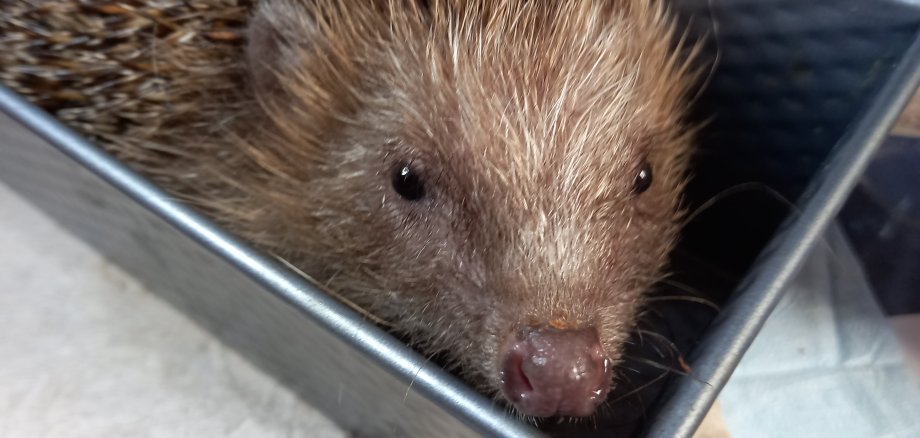
From October onwards, hedgehogs begin their hibernation phase so that they can bridge months with little food. All bodily functions are shut down, even the heart rate is greatly reduced to around 8 beats per minute. During this time, the fat deposits accumulated until autumn serve as an energy store, as hedgehogs lose up to 40 percent of their weight during sleep.
The extinction of insects is causing increasing problems for endangered hedgehogs, with the result that more and more hedgehogs are going into hibernation dangerously underweight, from which they often do not wake up. Malnourished or sick hedgehogs often have sunken flanks and a visible indentation in the neck, the so-called hunger kink. Instead of the typical pear-shaped silhouette, a malnourished hedgehog is narrow and its coat appears too large. The button eyes look dull and are barely recognisable.
Found a weakened hedgehog?
Anyone who finds a malnourished hedgehog should contact a vet who is familiar with hedgehogs as soon as possible.
The following should be done for the initial treatment of the weakened hedgehog:
- pick up the hedgehog with gloves and examine it for injuries,
- Remove fly eggs (if present) from the hedgehog, otherwise maggots will hatch from them within a very short time,
- weigh the hedgehog and note its weight,
- Place hedgehogs in a cardboard box at least 40 centimetres high or in a plastic box in a warm place (at least 18 degrees) and protect them from noise and excited four-legged friends.
The first food can only be offered when the hedgehog's stomach is warm. Private Hedgehog Help recommends a teaspoon of slurpy, unseasoned scrambled egg or pâté cat food every 1-2 hours as well as a small water dish in the hedgehog box. Milk, including cat's milk, is taboo.